
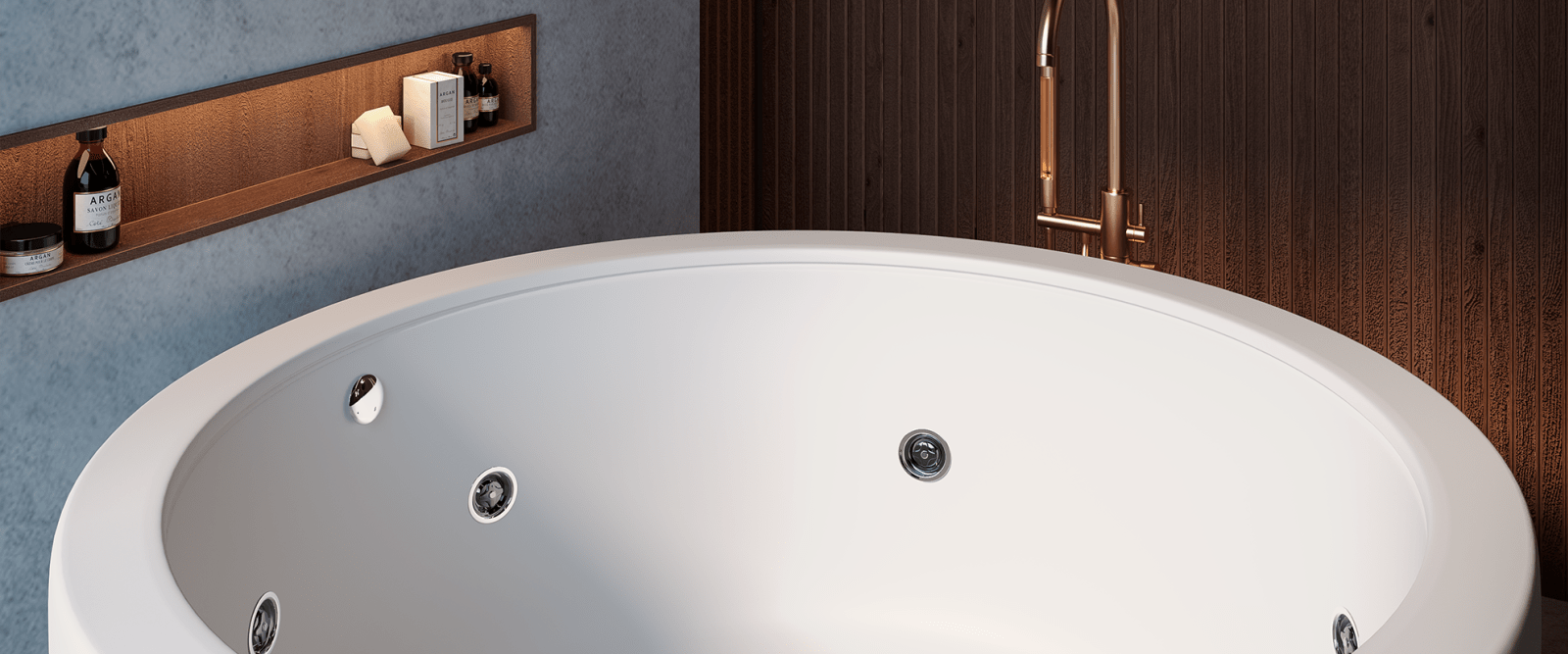
Indoor Bathtubs: Functionality, Aesthetics, and Efficiency for Residential Projects
Indoor bathtubs have become an intelligent solution in interior design projects thanks to their versatility, space efficiency, and ability to blend into different architectural finishes. This type of installation allows for cleaner, more organized, and personalized spaces without sacrificing comfort or technology.
Seamless architectural integration
Unlike freestanding bathtubs, built-in indoor bathtubs can conceal part of their structure under the floor or within cabinetry, enhancing visual continuity in bathrooms with integrated design. They fit especially well in projects with minimalist lines, covered walls, decks, or platforms that unify floor and wall finishes.
The possibility of cladding the exterior with the same porcelain, marble, or wood as the rest of the bathroom allows the bathtub to become part of the architectural language, rather than an isolated element.
Efficiency in compact spaces or shared bathrooms
This type of bathtub is ideal for optimizing bathroom space. Since they don't require visible skirts or free perimeter space, they can be installed in corners, flush with walls, or even on raised platforms. This makes them especially functional in:
- Small apartments
- Vertical housing
- Shared or double-vanity bathrooms
They are also an excellent option for those seeking functionality without giving up a relaxing bathing experience.
Compatibility with hydromassage systems
Many indoor bathtubs allow the integration of hydromassage or air-jet systems without compromising bathroom aesthetics. Depending on the design, pumps, overflows, and connections can be concealed within cabinetry or the installation base.
This integration maintains a clean, sophisticated look while delivering a spa-like comfort experience.
Technical considerations for installation
Although installation is relatively simple, certain technical aspects must be considered:
- Proper base or curb height for drainage and user accessibility
- Ventilation for the motor and access for maintenance (hidden grilles or doors)
- Precise location of plumbing and electrical connections
- Structural load calculations, especially for upper floors or raised platforms
Proper planning from the design stage makes both installation and future maintenance easier.
Applications in residential, hospitality, and wellness projects
Indoor bathtubs are commonly found in:
- Master bathrooms or relaxation suites
- Boutique hotels and premium residences, where the bathtub enhances the user experience
- Spas and wellness clinics, where visual harmony and functionality are essential
Thanks to their adaptability, they fit into various styles, from classic to contemporary, while allowing seamless integration with high-end materials.
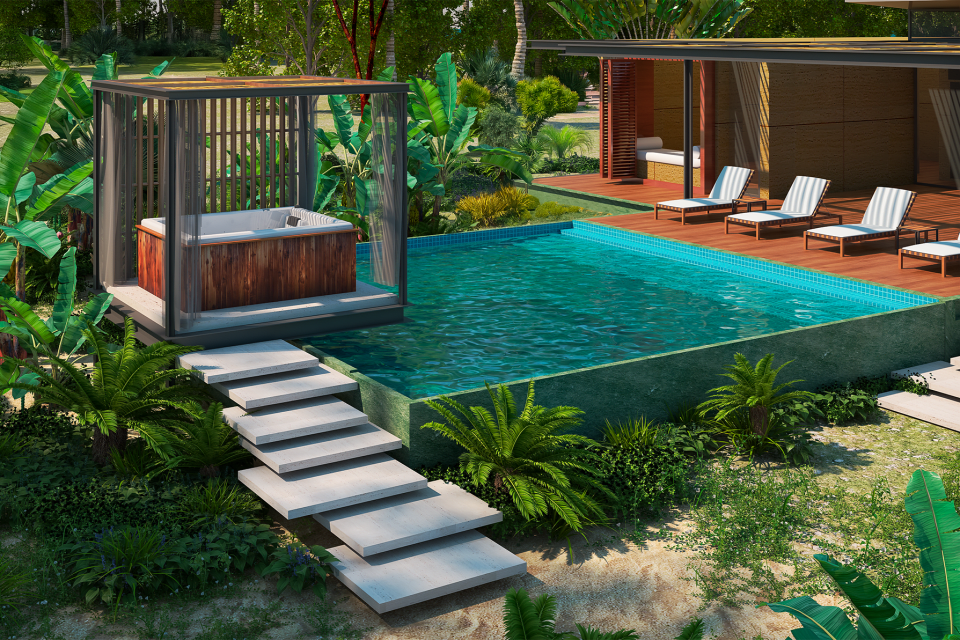
Outdoor Spa and Jacuzzi: Design, Technology, and Wellness in the Open Air
Outdoor jacuzzis that enhance design, provide comfort and durability, seamlessly integrating into rooftops, gardens, or terraces with advanced technology and easy installation.
Explore more articles
Discover more ideas and inspiration on our blog.